About Anesthesia Ventilator
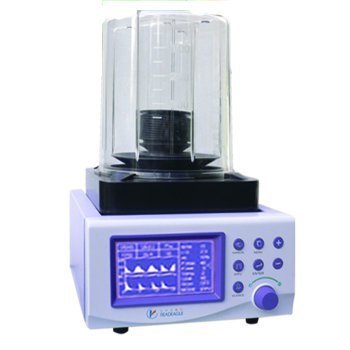
Anesthesia Ventilator High level, very stable anesthesia ventilator, high level microcomputer control the machine, it can match any different anesthesia machine.
| Main Features | It can be compatible with the any Anesthesia Machine |
|
| Microprocessor controlled ,touch key and knob |
|
| Unit simple in operation and easy to maintain. |
|
| Patient type: Adult and Pediatric |
|
| Control of Tidal Volume, Respiration Rate & I: E Ratio. |
|
| Power source: electronically controlled Gas Driven |
|
| Audible & visible alarms incase of faults. |
|
| Internal Battery :Re-chargeable for 3 hours |
| Specifications |
|
| Breath mode | IPPV,SIMV,SIGH,MANUAL |
| Display screen | 5.5" LCD screen |
| Tidal Volume | 20ml-1500 ml |
| Minute volume | 0.1 L pm -25 Lpm |
| Pressure Limit | 0-60 cm H20 |
| Peep | 3-20 cm H20 .mechanical PEEP |
| Inspiratory Pause | 0-25% |
| I:E ratio | 8:1-1:8 |
| Maximum Inspiratory flow | 15 Lpm |
| Bellows | suitable for adult and Pediatrics |
| Battery backup | 3 hours |
| Displays |
|
| Frequency | l-65bpm |
| I: E ratio, pressure limit | I: Eratio: 8:l-l:8,presure limit :60cmH2O |
| Airway pressure | 0-60cmH2O |
| tidal volume,MV, PEEP |
|
| Display wave | P-t,V-t |
| Alarms | Pressure high alarm, pressure low alarm, 02 low supply gas alarm, ventilator inoperative alarm, AC power lost alarm |
| Power | 220+ 5% V AC, 50 Hz. |
Advanced Modes and Precision ControlExperience versatility with IPPV, SIMV, SIPPV, and manual ventilation, all microprocessor-controlled for accuracy and reliability. The units digital touch screen allows intuitive adjustment of parameters including tidal volume, pressure, and respiratory rate, ensuring optimal patient care in both adult and pediatric cases.
Unmatched Safety & Monitoring FeaturesSafety is enhanced through built-in overpressure protection, an Oxygen Failure Protection Device, audio-visual alarms for critical conditions, and automatic compliance compensation. Optional integrated EtCO2 monitoring allows continuous assessment of patient ventilation, while the system provides secure event logging, ensuring comprehensive patient records.
Designed for Portability and Ease of UseWith castor wheels and braking systems, the ventilator is easily movable within medical settings. Its compact, durable steel and ABS plastic frame fits a variety of environments, and a backup battery guarantees continuous operation for at least two hours during power interruptions.
FAQs of Anesthesia Ventilator:
Q: How does the anesthesia ventilator support different modes of ventilation?
A: The ventilator offers IPPV, SIMV, SIPPV, and manual modes, all managed by an advanced microprocessor. This flexibility enables clinicians to tailor respiratory support to specific patient needs, from fully controlled to synchronized or spontaneous breathing.
Q: What safety features are built into this anesthesia ventilator?
A: The device includes overpressure protection, an Oxygen Failure Protection Device (OFPD), automatic compliance compensation, and an audio-visual alarm system to identify power failures, pressure anomalies, apnea, and circuit disconnections, ensuring safety during operation.
Q: When should the EtCO2 monitoring option be used?
A: EtCO2 monitoring is recommended when continuous assessment of patient exhaled CO2 is essential, such as during long surgeries or for patients with complicated respiratory conditions. The integrated sensor provides real-time readings when enabled.
Q: Where can this ventilator be used?
A: Designed for operation theaters and ICUs, its portable structure and robust build allow deployment in multiple hospital environments. It is suitable for both adult and pediatric patients, making it a versatile asset for medical facilities.
Q: What is the process for adjusting tidal volume and respiratory rate?
A: Clinicians can adjust tidal volume (20-1500 ml) and respiratory rate (2-80 bpm) easily through the 7-inch LCD touch screen interface. The microprocessor ensures selections are precise within error margins, adapting ventilation to patient needs.
Q: How does the backup battery benefit patient safety?
A: The integrated backup battery provides at least two hours of uninterrupted operation in case of power failure, safeguarding patients during critical procedures and allowing time for power restoration or alternative interventions.





 Send Inquiry


 Send Inquiry